How do they do that? Digital accessibility at the province of South Holland
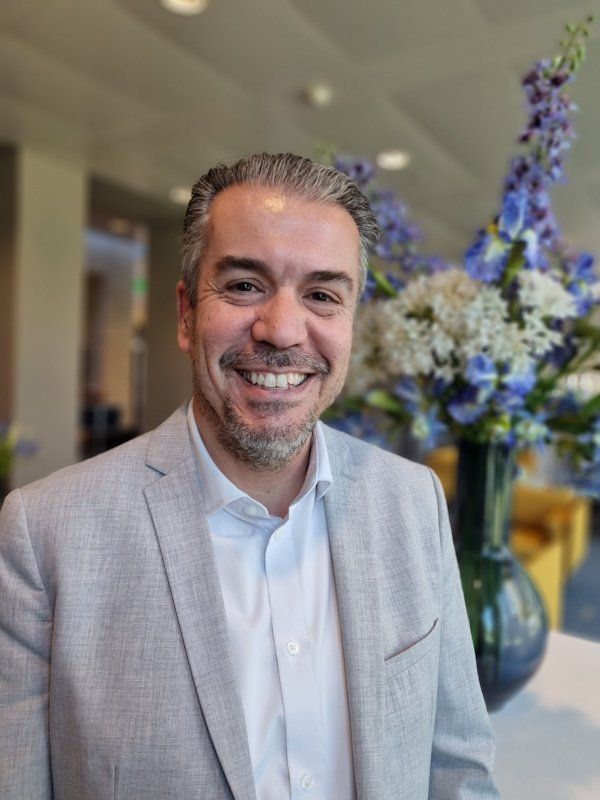
Carlos Santos, digital accessibility project leader, talks about digital accessibility at the province of South Holland.
In this series, we take a look at different organizations. How are they working on digital accessibility? What could be improved and what is already going very well? In this article, we talk with Carlos Santos about how to organize and embed digital accessibility.
Like many other governments and organizations, the province of South Holland wanted (and needed) to start working on digital accessibility. The reason was clear: meet the legal requirements that apply to governments. As project manager in the I&A (Information Technology and Automation) department, Carlos was asked in late 2021, “Can you turn this into a project?” “After thinking about it, my answer was ‘no,’” he says. “This is because digital accessibility is so broad. It has to do with legislation, processes, knowledge, tooling and technology. It affects the whole organization; both in implementation and in the 'mindset'. It's a long-term thing, and doesn't really have the characteristics of a project, where you know in advance what you're going to deliver. You don't have a set timeline or benchmark you can work towards.”
Quick wins
The team that got to work was quite broad and consisted of different areas of expertise: web management, communications, legal, records management, record management, an analyst, an architect and someone from the Information Security team. Carlos: “This way, all relevant specialists and departments were involved from the beginning. From this broad group, we are now left with a core group. That consists of three communication consultants: one for internal communication, one for making audiovisual content accessible, and one for accessible PDFs.”
Proportionality principle
And that last part in particular, as many organizations know, was the biggest hassle. What do you do with all those thousands of PDF files on your website? “A business analyst helped us make an analysis: who is responsible for what? And where could you embed things? Someone from legal affairs then looked at what exactly was legally required and what we had to comply with. From that came the advice to apply the principle of proportionality: what does it achieve compared to the effort you have to make? Based on that, we started with the documents that are used the most. We looked at which department processes the most documents. That turned out to be the GS support department. We proceeded with that. We made a list of most-used PDFs and the ten most-used templates. An expert from the Smartdocuments tool helped tackle the templates, because that is specialized work. Internally, two administrators of this application helped, as well as an outside agency to advise us. They helped us with questions such as: how to make a PDF accessible, what requirements must a PDF meet, and is this the right approach? So we started working on technical changes, programming, design adjustments, testing and fine-tuning. With the result that the most frequently used templates had been updated within a year.”
The next step was the web team, Carlos says. “They are offered PDFs to publish. So they have to be competent to test whether the PDFs are compliant or not. And we are joining the WOO team, which has to make sure that even more government information is made public. With that, you see a shift from PDFs to Microsoft Office, Word. We want to make sure that a document is as accessible as possible right from its creation. We started the first training sessions in April. The idea is to train 'ambassadors' per team who know how to structure Word documents so that they meet accessibility requirements. The goal is also to include the accessibility criteria in our standard Office training courses. These will be given in-house by certified trainers. HR is also working on making digital accessibility part of the process for new employees. We want to make all employees aware of the importance of digital accessibility when they join us. Another milestone is the fact that we have now included digital accessibility as a requirement in tenders for software. And it will soon also be in our general purchasing conditions; which, by the way, applies to all provinces. The phase we are in now is perhaps the most difficult: organizational assurance. We do not yet have an accessibility officer or other team that monitors and promotes digital accessibility. In seeking ownership and assurance, we are looking to connect with other teams working on the Open Government Act and Digital Government Act.”
Bringing focus with the right people
“The success of our approach lies in the focus we apply,” Carlos said. “We meet weekly and keep each other focused. There is energy on it. Digital accessibility is a big cloud, the power is in making it small, applying focus with the right people and little by little getting the right results. Then it becomes visible that things have been achieved and others get excited about that. In this way we hope it will spread like an oil slick. We therefore consciously share our successes: we post messages on the intranet, make podcasts and organized a mini-conference with Vincent Bijlo, the blind comedian. He showed what he encountered in everyday life in terms of accessibility. In June we will organize an internal market; there we will tell the team what we are doing. I sometimes compare digital accessibility with digital security and privacy. Ten years ago the tenor about this was also: it is annoying and makes our work difficult. Nobody felt like it, but in the end a whole organization was built around it and it's in our DNA. I hope that ten years from now we can say that digital accessibility has gone through a similar trajectory. I am confident that we will succeed. The frustrations we sometimes have now; in ten years we'll hopefully be laughing about it!”

