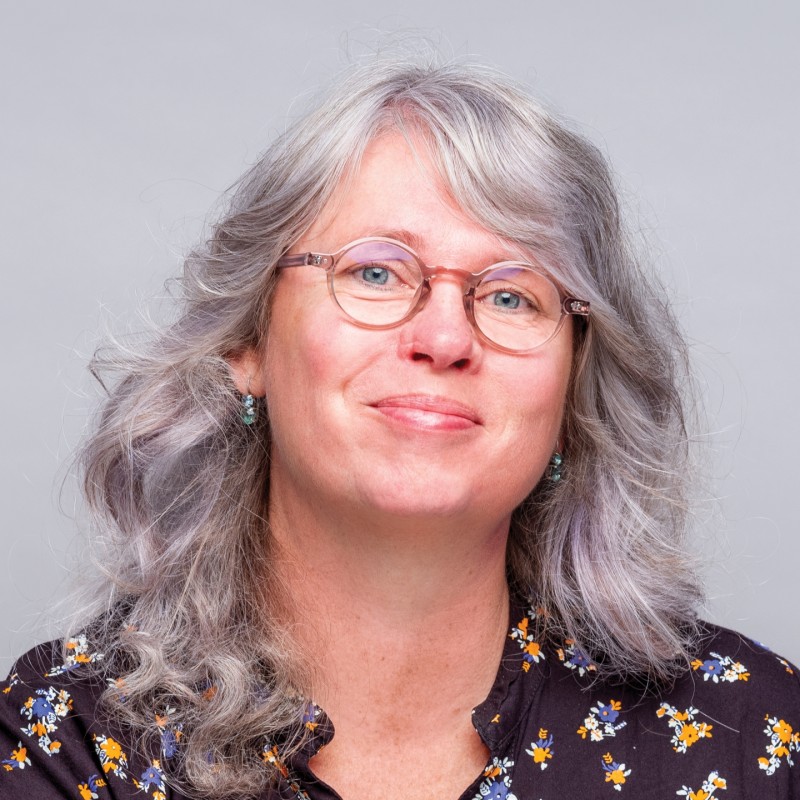
“Accessibility has really captured my interest”: Sonja on her training at Swink
Would you like to deepen your knowledge of digital accessibility? There are various training courses and programs that can help you do just that. The digital accessibility researcher training program offers the most in-depth exploration of the subject. Sonja Duijkers, webmaster at the Humanities Cluster (HuC) of the Royal Netherlands Academy of Arts and Sciences (KNAW), completed this program with us. She talks about the program and how she applies the knowledge she gained in her work.
In her work at the KNAW, Sonja encountered digital accessibility. “I didn’t know anything about it at the time, so I enrolled in the ‘Digital Accessibility Advisor’ program at Internet Academy. Accessibility really grabbed my attention then. That’s why I went on to complete the WCAG specialization as well. I enjoyed it immensely and wanted to pursue it further. That wasn’t possible at Internet Academy, but it was at Swink,” says Sonja.
What makes accessibility so interesting to Sonja? “I enjoy the puzzle-solving aspect of accessibility research. Figuring out where the problem lies and why things aren’t working properly. I also think it’s important that it helps people. My mother had low literacy skills and struggled a lot with letters and websites. That’s what sparked my interest, because everyone should be able to participate. But when we build websites that are too complicated, that doesn’t happen. I’ve done that myself in the past. That’s why I know how quickly things go wrong in practice and how hard it is to get it right.”
Expectations for the accessibility researcher training program
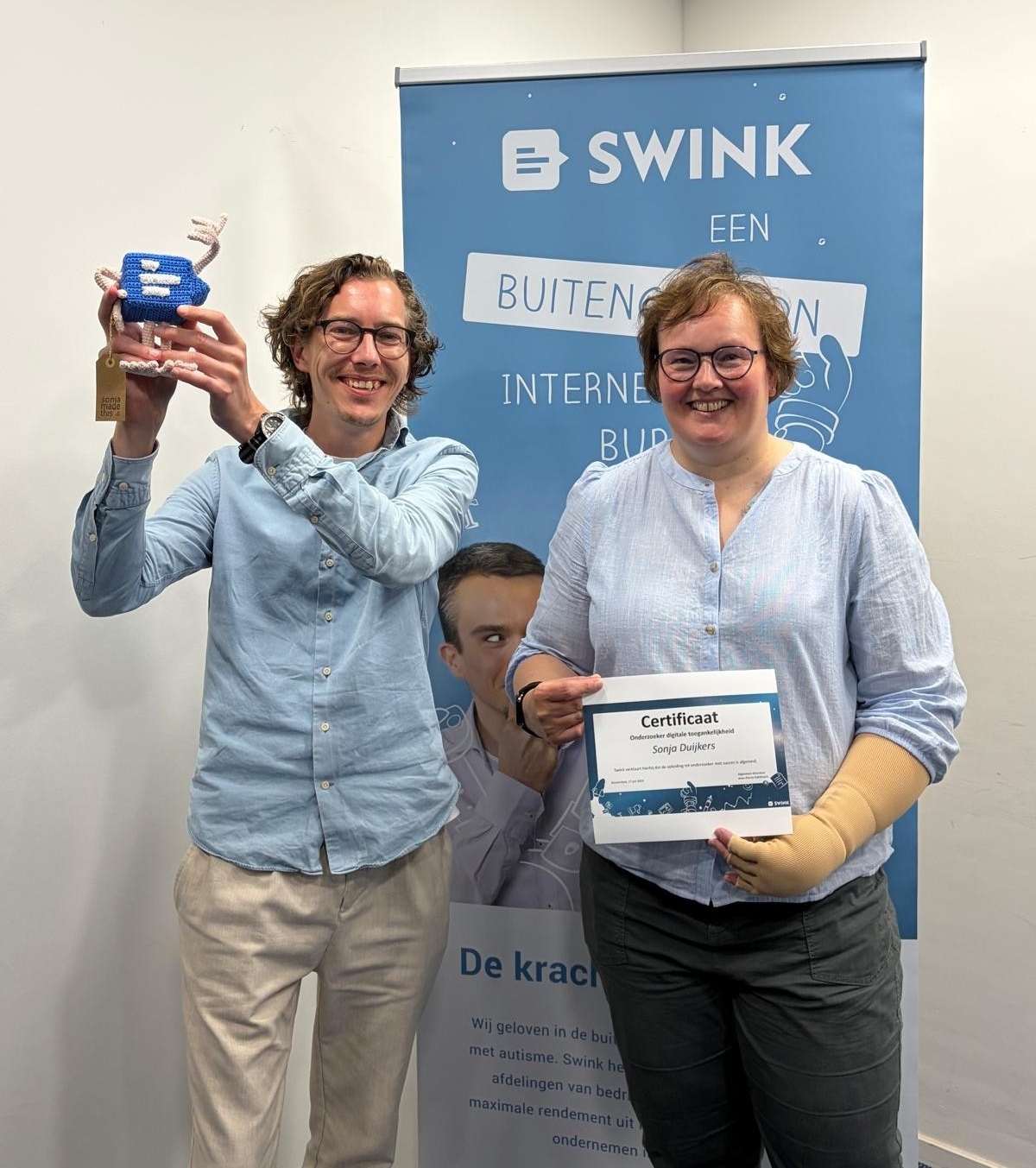
Sonja soon became familiar with Deque’s Axe Auditor tool. “After Lydia explained it to me, I started using it to conduct research. I noticed that I was all over the place. I needed some structure, so I asked how the specialists at Swink approach it. Now I thoroughly review one page before moving on to the next. That works well and is satisfying.”
Personal guidance on content and the process
One tip that helped Sonja was to create a cheat sheet. “It contains practical notes, such as what to look out for with certain criteria. It’s super handy to be able to fall back on it.” In addition to content-related guidance from our specialists, Sonja also received guidance on the process. “I had regular check-ins with Marie-Claire to discuss my progress and whether we were still on track. It was nice to take a moment to reflect on that every now and then.”
Not only was the guidance excellent, but the atmosphere was great, too. “I always found it enjoyable to be at Swink. Everyone there is incredibly nice and friendly. It really felt like a warm welcome, and like I belonged. I especially enjoyed our group lunches, and I laughed a lot during those.”
Applying accessibility knowledge in the workplace
Now that Sonja has completed the training, she can apply her knowledge at the HuC. She has already conducted an audit and several quick scans. “Next, I’m going to conduct an audit of the humanities cluster’s new website. That will be the first one without Swink’s help. I’ll also be helping to ensure digital accessibility within the HuC. The plan is for me to take on a leading role in this effort. The KNAW has 12 institutes, and they all need to meet accessibility standards. So, there’s a great challenge within our organization that will allow me to continue developing my skills in this wonderful field.”